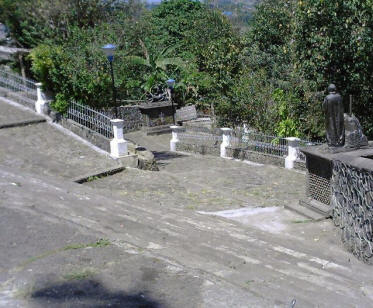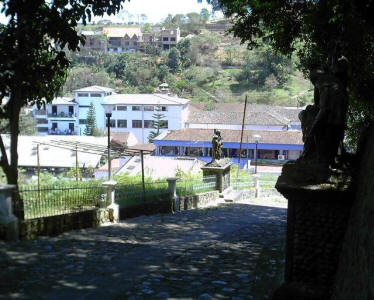

Popayan Colombia
Up Ipiaels Colombia
Postcards from:

Big Bear Lake USA
San Jose Costa Rica
Granada Nicaragua
Managua Nicaragua
San Salvador ElSalvador
Tegucigalpa Honduras
San Pedro Sula Honduras
Copan Ruinas Honduras
La Ceiba Honduras
Orange Walk Belize
Panama City Panama
Popayan Colombia
Ipiales Colombia
Quito Ecuador
Galapagos Is. Ecuador
Cuenca Ecuador
Tumbes Peru
Lima Peru
Nazca Peru
Cuzco Peru
Machu Pichu Peru
Cuzco Again
Lake Titicaca Peru
La Paz Bolivia
Santiago Chile
Valparaiso Chile
Easter Island Chile
Puerto Montt Chile
Castro Chile
Coyhaique Chile
Puerto Chacabuco Chile
Punta Arenas Chile
Puerto Natalas Chile
Puerto Williams Chile
Ushuaia Argentina
Buenos Aires Argentina
Puerto Iguazu Argentina
Montevideo Uruguay
Caracas Venezuela
PortOSpain Trinidad
Georgetown Guyana
Paramaribo Suriname
Cayenne French Guiana
Dominican Republic
Back Home in California


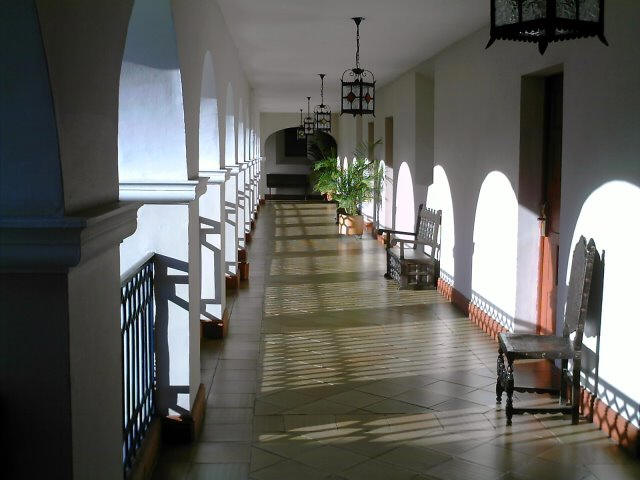
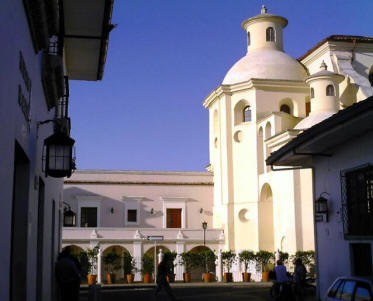
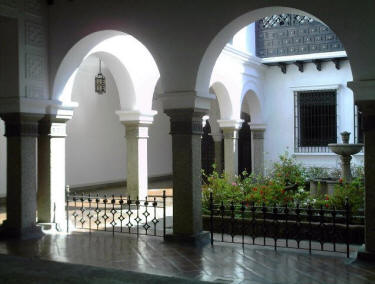
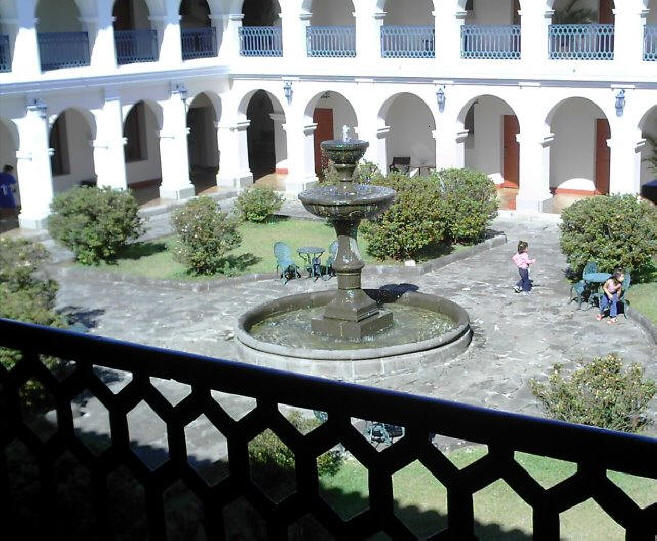
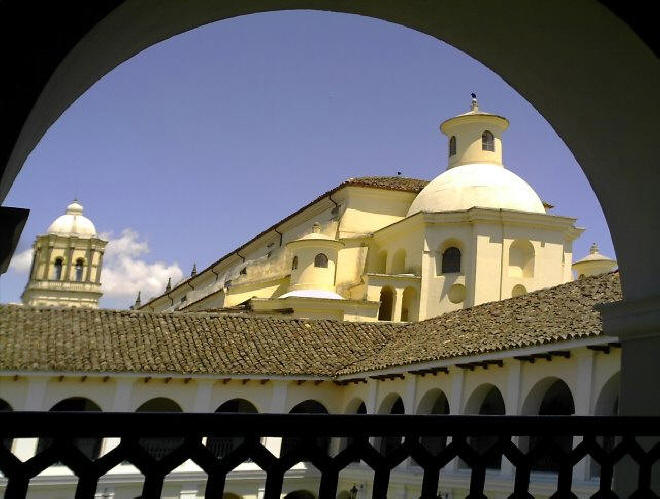
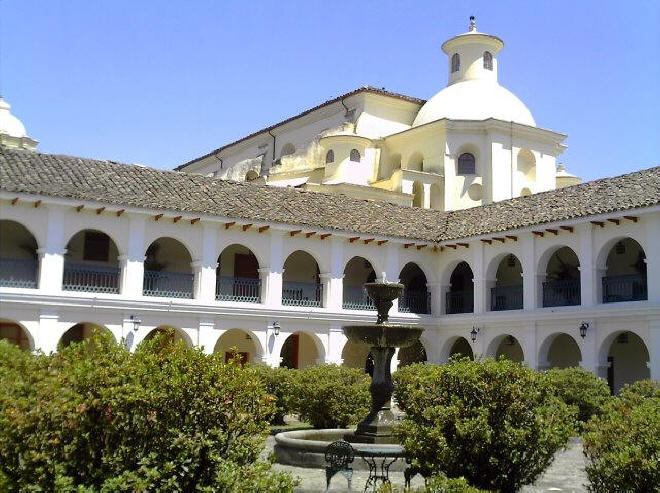
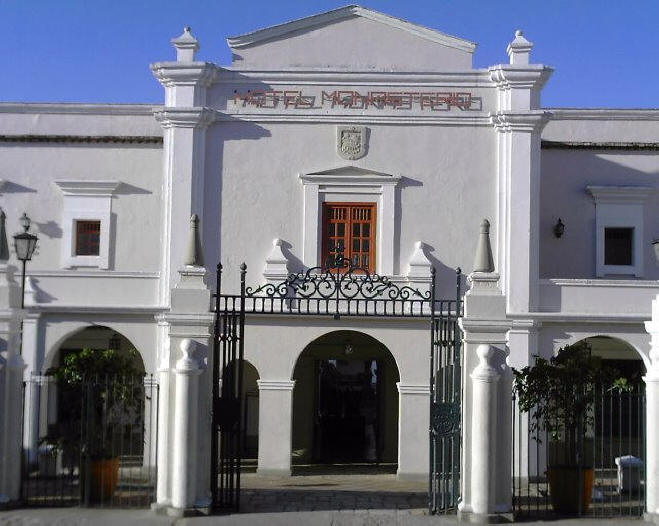
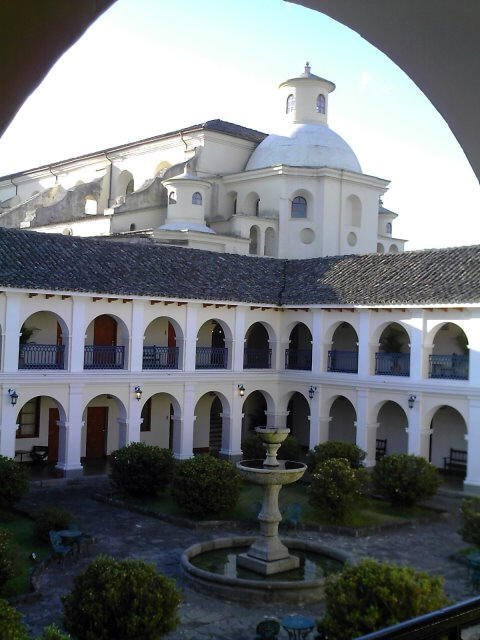
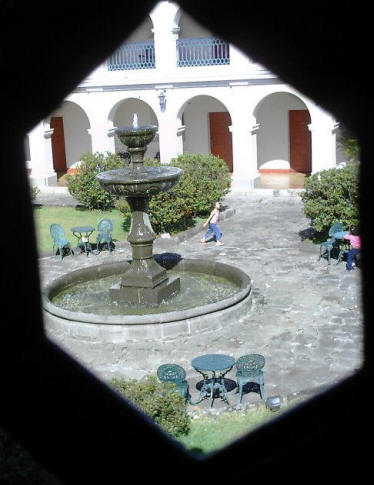
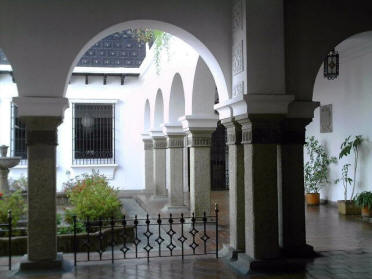
Popayan Colombia: This is a shot inside the courtyard of the Hotel Monasterio looking down one of the hallways.


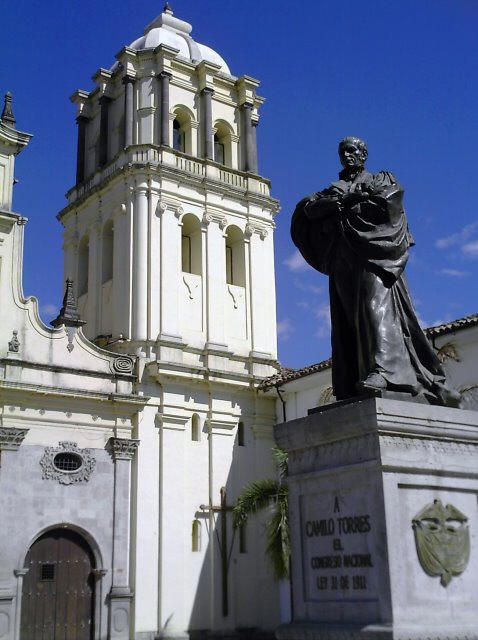
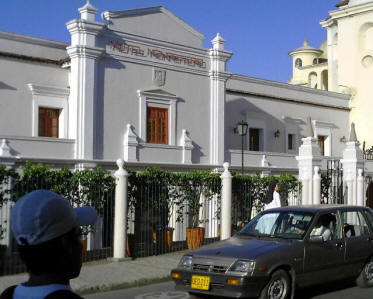
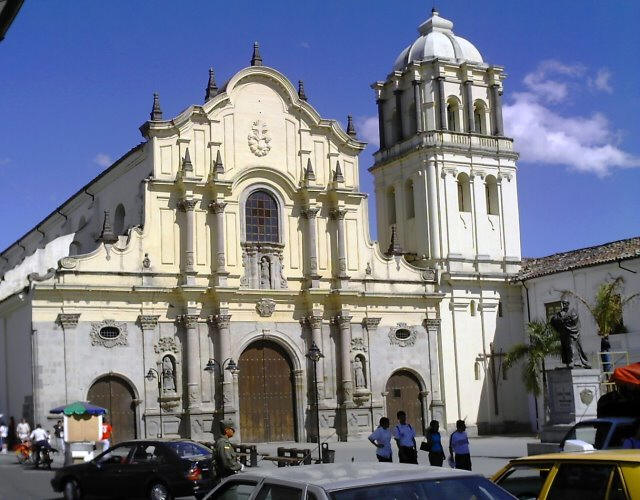
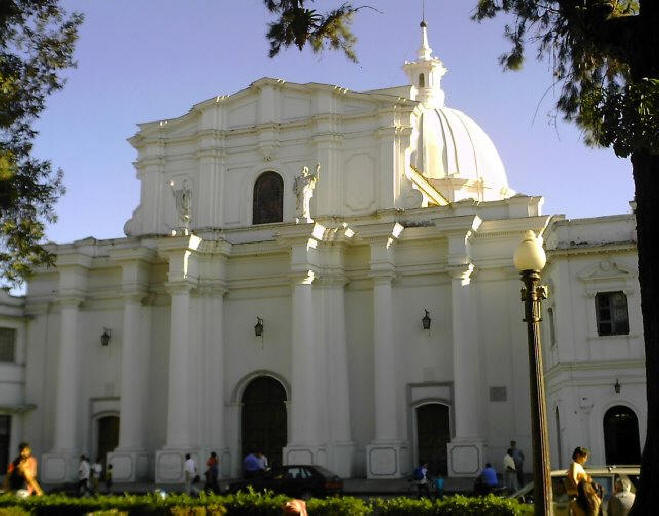
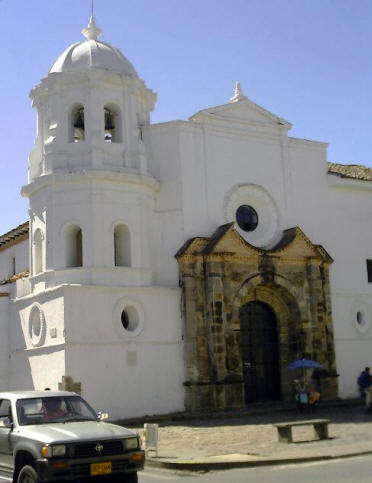
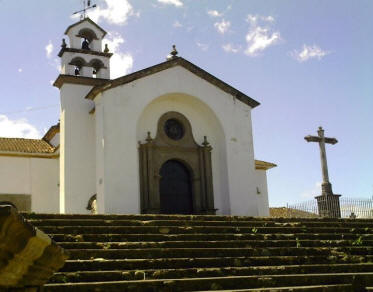
Popayan Colombia: This is the entrance to the San Francisco Church next to the Hotel Monasterio where I stayed while in Popayan.


More photos to be added.


17 September 2005

Hello from Popayan Colombia, 

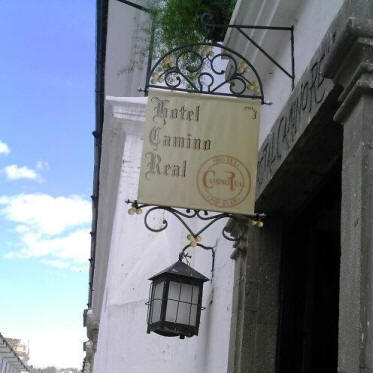
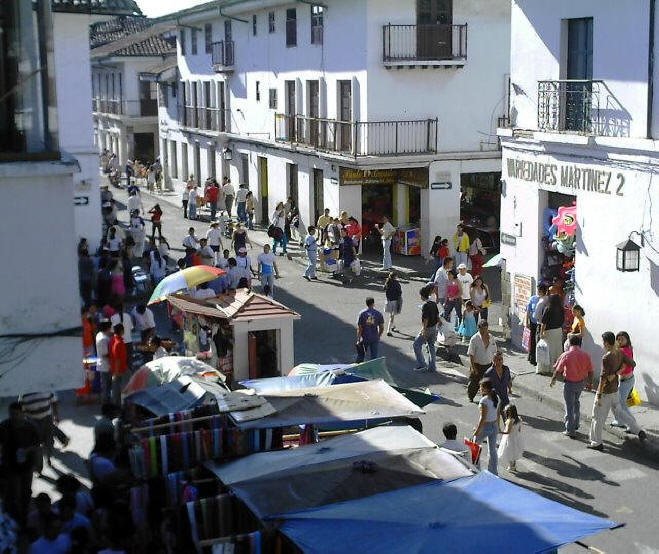
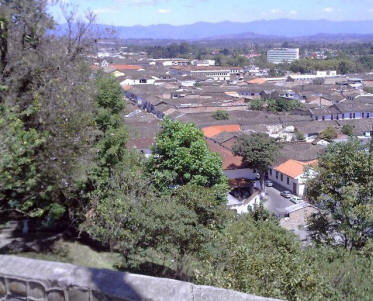
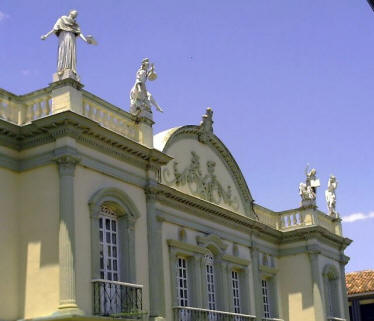
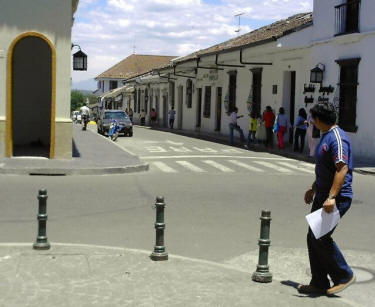
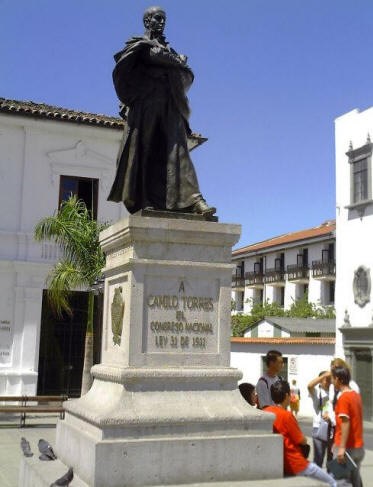
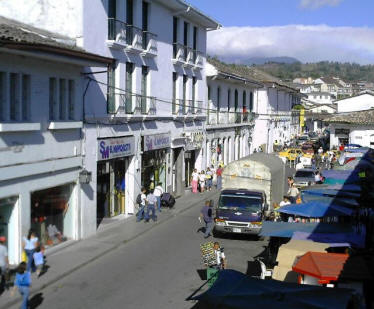
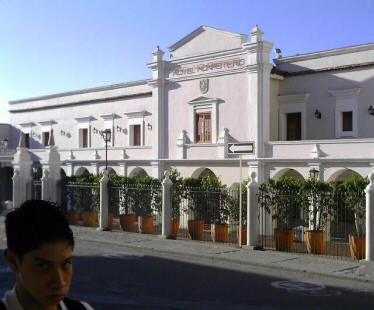
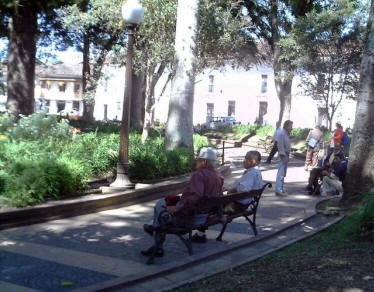
Popayan could be Santa Barbara's sister city with its modernized old Spanish architecture and lots of history. The Plaza in the center of town is surrounded by restored colonial buildings. The two best hotels have retained the old colonial flavor. The well maintained Hotel Camino Real remains pretty much in its original condition. The Hotel Monasterio, an old desanctified Franciscan Monastery where I'm staying has upgraded bathrooms and totally restored room interiors. Those monks really knew how to create peaceful living spaces as you will see from my pictures. The modern restoration has made the place like new and they furnished the public areas with period furniture, leather chairs, etc. The guest rooms have some compromises for our comfort, but over all they still feel like austere monk's cells. No air conditioning anywhere here; it isn't needed. It is another in the Dann Hotels chain I first discovered in Cali. 

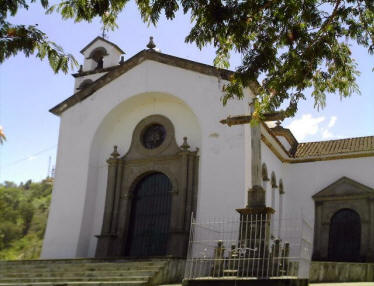
The hotel is attached to the old original Iglesia de San Francisco where Mass continues to be celebrated daily. I can feel the holy vibes from my room a couple hundred feet away. The place reminds me of the Paradores I enjoyed in Spain twenty years ago. There, the Spanish government converted a large number of historically important structures into luxury hotels as a means of generating funds needed to preserve them. Another monastery here has been converted into a city college. I'm incidentally learning a good deal about the early years of Spanish colonization. Those Black Robes (Jesuits) did many dastardly deeds in their determination to convert the heathens. The Brown Robes who lived in our monastery seem to have made their points more gently. Of course their peaceful founder, St. Francis of Assisi taught gentleness.  

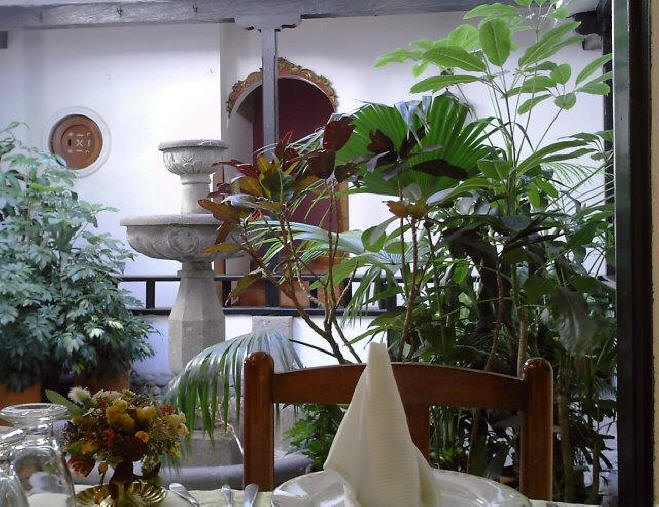
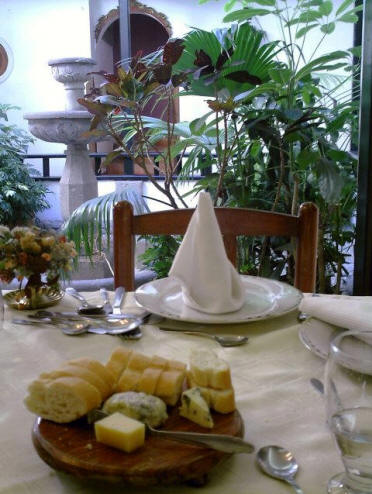
The hotel restaurant seats guests on a  patio overlooking the spacious grounds of the monastery. Alone on the patio that first evening, I selected the $8 Club Sandwich for my meal. The chef must have misunderstood the meaning of "club" because he concocted a sandwich so big and heavy it might well have been used as the business end of a battle club. With a slab of steak, the usual other meats and cheeses, four slices of toast with tomatoes and lettuce, the assembly measured five inches thick. Even cut into quarters no one could have eaten it without some disassembly... which proved to be quite messy. Flute and lute music selected for the dining area might have been chosen for a New Age meditation gathering. It added perfectly to the soothing monastic atmosphere and my mood.  

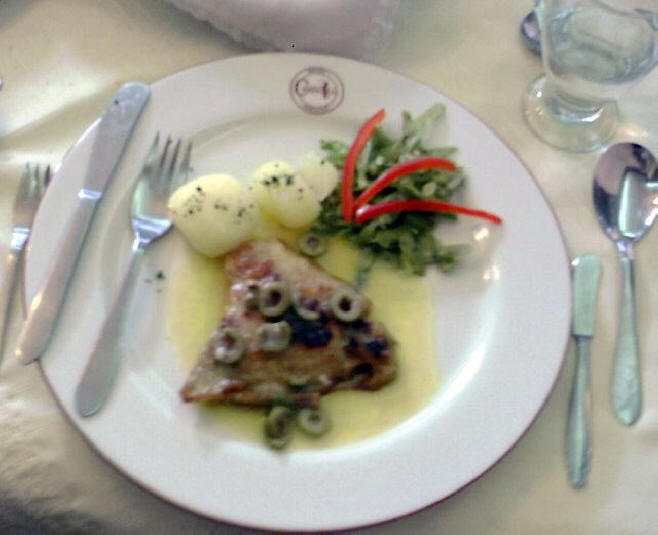
Naturally, I searched the town for other good hotels, but everyone says this is the best and I  personally found none better. On the other hand, the best restaurant might well be in the old atmospheric colonial style Hotel Camino Real where I had a $20 gourmet six course feast one afternoon. The hotel itself is elegant in a colonial sort of way and quaint, being a converted hacienda originally built more than a century ago. Like so many important establishments in the city, the entrance is unimposing and obscurely marked. During my explorations I walked right by it twice. 

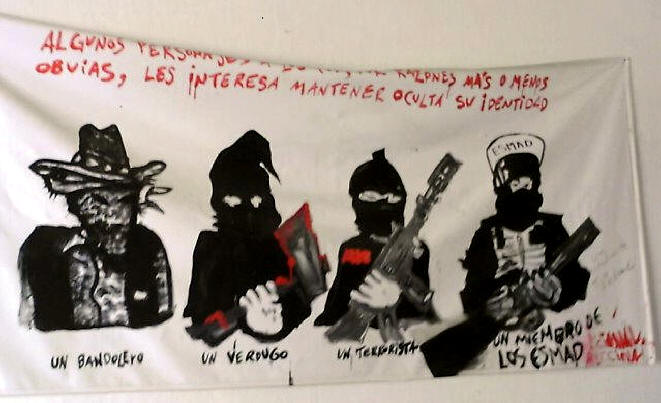
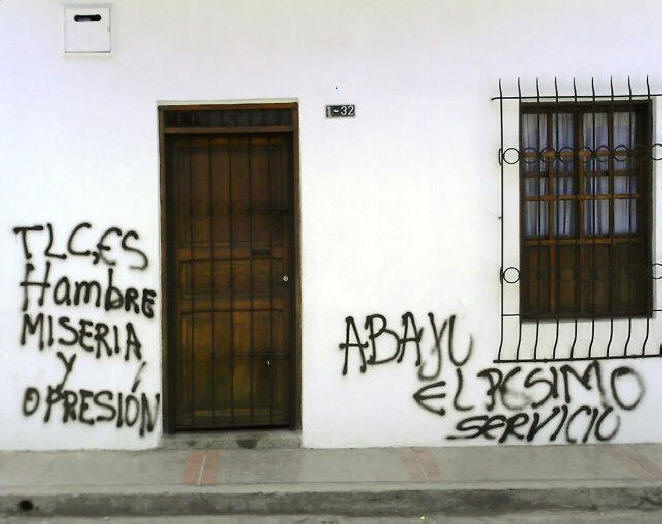
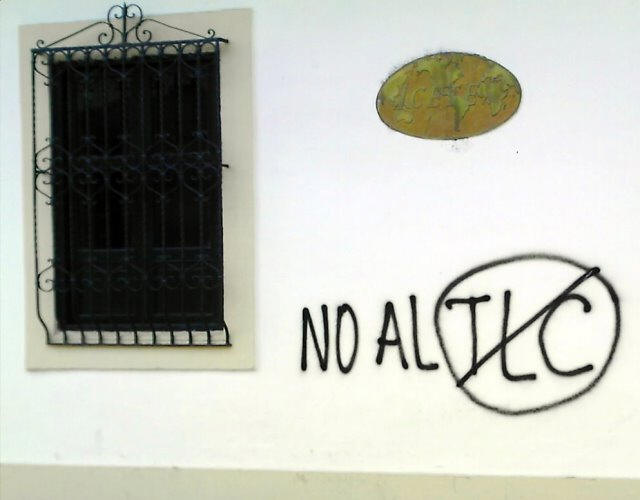
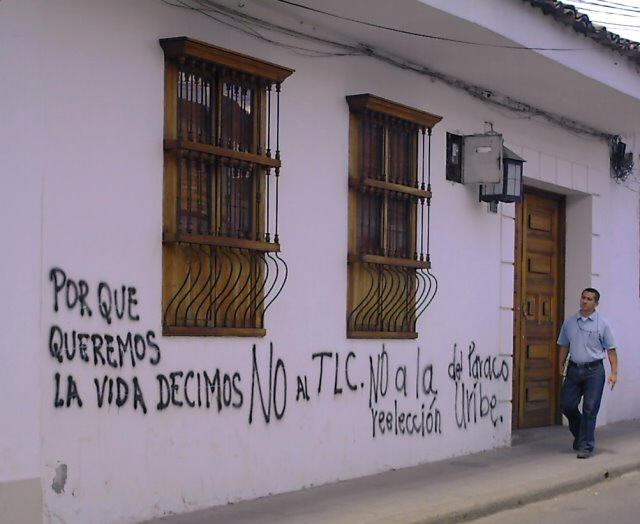
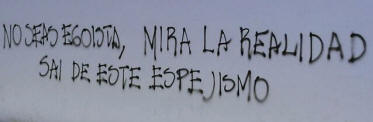
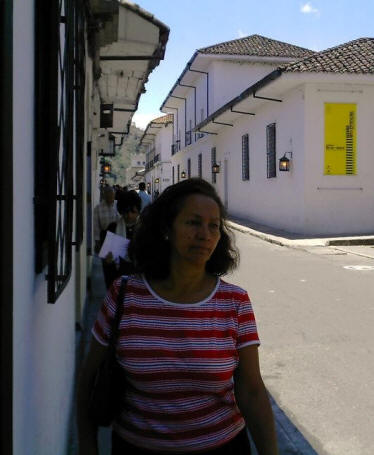
The whole town is cool... and WHITE. Everything is whitewashed. Even the nun I saw walking by the Hotel Monasterio one evening was clad head to toe in white. On a foggy day the whole place would probably disappear! While the city streets and sidewalks appear clean, dust getting into my eyes during gusty winds has been a problem here. I see a lot of graffiti in opposition the the free trade agreement being discussed with heads of South American countries by the Bush administration. The acronym in Spanish for the  plan is TLC! (TLC stands for Tratado Libre Comercio, not tender loving care). Oscar, a Colombian coffee broker explained good Colombian coffee is hard to find in his country because foreign importers are willing to pay more than Colombian buyers. I asked him about the South American Free Trade Agreement... and  all the graffiti in opposition to it. "I like it and I think most business people here think it will mean more opportunities for export sales. Poorly paid laborers think it will lead to even worse working conditions than they now have so they oppose it."  

I am now communicating increasingly complex ideas in what still must be awful Spanish. The Colombians good naturedly tolerate my wild attempts to form understandable strings of mispronounced words and more often than not succeed to forming simple responses containing enough Spanish words I recognize to make exchanging ideas possible. The first explorers must have undergone a similar education when encountering strange new languages. It is a joy to see the light of understanding turn on as I stammer away. While far from systematic, learning by necessity is certainly effective. 

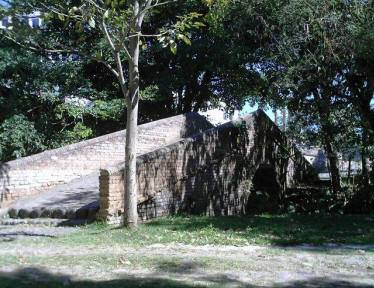
I've had to abort my plans to bus over the mountains to the east for a visit to some remarkable ruins near the town of San Agustin. That region is swarming with guerrillas who hate Americans... not Britons or Australians or Canadians... just Americans! Everyone I've asked here in Popayan gave me the same answer, though Oscar, speaking perfect Princeton English said "the road is very busy and rarely is any vehicle attacked... unless an American is known to be aboard!" There were 185 kidnappings in the first four months of this year according to the US State Department. I am now pondering my options: continue south to the Ecuador border and on to Quito or backtrack to Cali and fly over to Leticia for a boat trip up the Amazon in Peru. All of the roads out of Popayan present some risks, though the bus companies assure me going south is "no problemo." As Popayan is a totally charming colonial city I am not anxious to leave. Photos taken while in Popayan are here.  

Bogota Colombia

But I get ahead of my story... In the last postcard from Panama I chronicled the connecting flight debacle up to landing in Bogota. The hotel is a part of a large modern shopping mall. The hallways connecting the hotel with the mall feature amazing replicas of pre-Colombian pottery art. Check out my photos to see the quality of what they put on display.The respite over night at the comfortable Hotel Intercontinental made the future look brighter and the next morning at the airport I caught a flight to Cali.

Cali Colombia

Upon arrival in Cali, as I had already passed customs in Bogota, I walked directly through the arrival lounge and out to the transportation area where public city buses waited nearby for passengers. Inquiries about changing money  produced another surprise: Colombia, like Panama also uses US currency. A Sacagawea dollar coin similar to the rarely used Susan B Anthony coin back home is widely used and carries all the usual marking of our coins including the mint codes. Information I found on the Internet claims it is legal tender in the US. Photos taken during my short stay in Bogota are here. 

Reaching Cali's central bus terminal I boarded a new bus and made it to an area near the center of the city. The Torres de Cali sky scraper contains a hotel and after my initial two hour walking hotel search seemed to be the best bet for a first nighter. The receptionist quoted a rate of about $60 including tax and breakfast and I checked in. Ten minutes after getting into the room the receptionist called to say her boss wanted to add tax onto the rate quoted and asked me if that would be O.K. I answered with an emphatic "no" and she told me to wait while she conferred with her boss. On hold for five minutes and disgusted, I hustled down to the lobby to cancel my booking and left in a huff. The Hotel Valle Real I'd seen earlier at $60 is only a block away and that became my first home in Cali. With Colombia producing some of the best coffee in the world, I couldn't believe what poor coffee the Hotel Valle Real served for breakfast.  

Now more familiar with the city layout I continued my lodging survey and found the Hotel Dann Carlton Cali, a magnificent five star establishment... and at $60 an excellent value. The Dann Carlton Cali, has great coffee... and free in the lobby whenever a guest wants some. Breakfasts at the Dann Carlton made dieting impossible. Watching the chef I discovered eggs cook better when covered with a dome during frying and honey over papaya is delicious. All hotels in Colombia seem to tack on a daily insurance fee of a couple dollars. At one point I cut my hand on a broken glass and could not stop the bleeding. The hotel noted my insurance covered such problems and called the paramedics to look at my gushing blood. Fortunately, the injury turned out to be minor. 

One of my walks  around Cali took me into the old "Dangerous, be careful!" part of the city around the central plaza. I've  previously talked about the joys of encountering unusual smells in my travels. Cali is special in this regard. Everywhere I turned a new odor enveloped me; some recognizable, others foreign, none really unpleasant. Cali has a replica of the famous Rio De Janeiro landmark Cristo Redentor. The colossal hilltop statue is visible from my hotel. On another nearby hilltop stands the Three Crosses monument. Colombianos take their public religion seriously. At opposite extremes of the city limits are the two main shopping malls:  Chipichapa (fun to pronounce, isn't it) to the north and the much larger Uni Plaza to the south. I visited both several times for the extensive food courts, shopping for socks and a badly needed haircut. Photos taken while in Cali are here. 

Motorcyclists wear bright visibility vests with their license numbers on the back. I wondered why the Military Police bothered to wear camouflage suits when they were going to  cover them up with visibility vests. Sniffer dogs are in wide use throughout Columbia. I watched as a team checked out the area around the Dann Carlton Hotel Cali. I wonder at the possibility of training more/all dogs in America to be sniffer dogs under a Homeland security provision. I hear a lot of the music I enjoyed during the 60's; folk music, the Beatles, etc. Occasionally I must put up with a South American version of Rap in Spanish, weird and thoroughly irritating. In Cali there are many independent bus companies. Each one has a Route #1 which follows its own unique route. That makes it very confusing for a visitor to the city. Frequently buses are boarded by beggars or vendors or entertainers who collect donations after their presentations.   

Inquiring about dangers on the road south as I prepared to leave Cali, everyone advised me to avoid buses and use one of the frequent collective taxis. The cost difference amounted to less than ten dollars, so I grabbed an eight passenger van for Popayan about three hours to the south.  

Peace,
Fred Bellomy

PS: US State Department warnings for Colombia: "During the past two years, incidence of kidnapping and other violent crime has decreased markedly in most urban centers, including Bogota, Medellin, Barranquilla, and Cartagena.  Nevertheless, Colombia continues to have a high rate of kidnapping for ransom, with 185 kidnappings reported in the first four months of 2005. American kidnap or murder victims have included journalists, missionaries, scientists, human rights workers and businesspeople, as well as persons on tourism or family visits, and even small children.  No one can be considered immune." Hmm... that's more than one a day!  

PPS: I finished reading The Awakening by Kate Chopin, a story published twenty years before women were granted the right to vote in the U.S. It is about a wife who refused to suppress her "improper" feelings in an age when women were chattel. It is a charming tale with subtle hints of awakening sexuality, something absolutely taboo in that era, and therefore condemned by polite society of the age. That women's rights have come so far is in part due to the pioneering efforts of this author. 

"Kate Chopin was born Katherine O'Flaherty, in St. Louis, Missouri. Her parents were from Irish and Creole backgrounds. When Chopin was widowed at 32, she began writing to support herself and her six children. She was widely accepted as a writer of local color fiction, and was generally successful until the publication of her scandalous novel The Awakening, in 1899. Perched between the social conservatism of the nineteenth century and dealing with tabooed themes too soon for the growingly open twentieth, the novel's sexually aware and shocking protagonist, Edna Pontillier, pushed Chopin into literary oblivion. Chopin, and her memorable characters and stories, finally emerged from society's morally imposed ostracization during the resurgence of women's rights in the early 1970's." 


Popayan Colombia: This is the entrance to the San Francisco Church next to the Hotel Monasterio where I stayed while in Popayan.


Search for:


Popayan Colombia: This is a shot inside the courtyard of the Hotel Monasterio looking toward the Church of San Francisco. The church still offers masses daily.


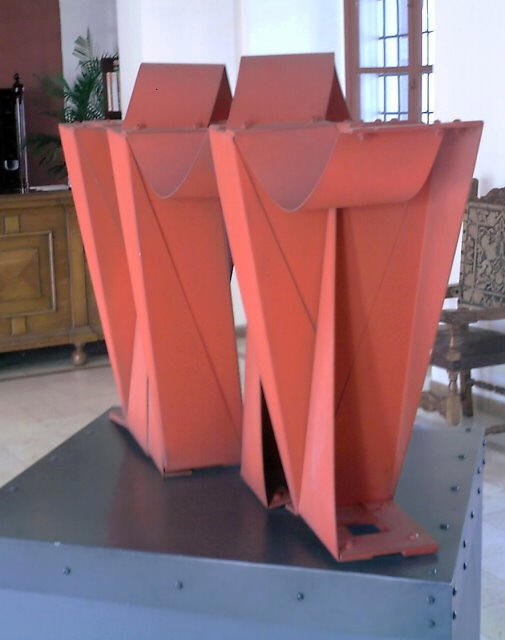
Popayan Colombia: This is a shot inside the lobby of the Hotel Monasterio looking at a sculpture near the entrance.


Popayan Colombia: Graffiti opposing the South American Free Trade negotiations.


Popayan Colombia: Graffiti opposing the South American Free Trade negotiations.


Popayan Colombia: More graffiti opposing the South American Free Trade negotiations in 2005.


More photos to be added.


My excellent $5/mo web-host
Reference photo
August 2002
Hit Counter

Next postcard